Posted in Bookworm review, nature

February Arrives

As another month rolls on, an initial glance may suggest that nothing is changing. Bare trees and quiet gardens with cold weather still nipping at fingertips and noses still persist, while sunny days bring glorious colourful skies.

A stripey sunset.

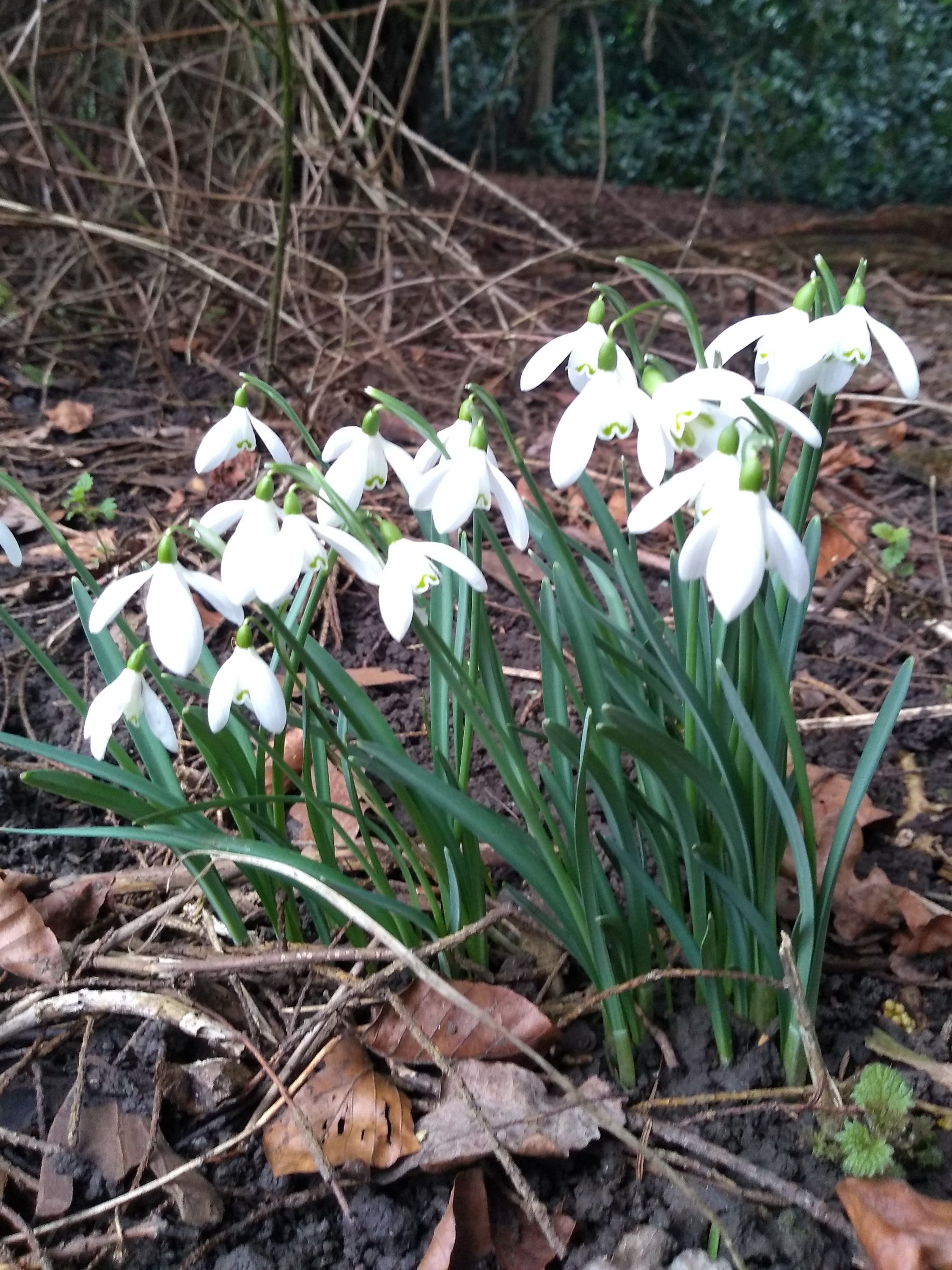
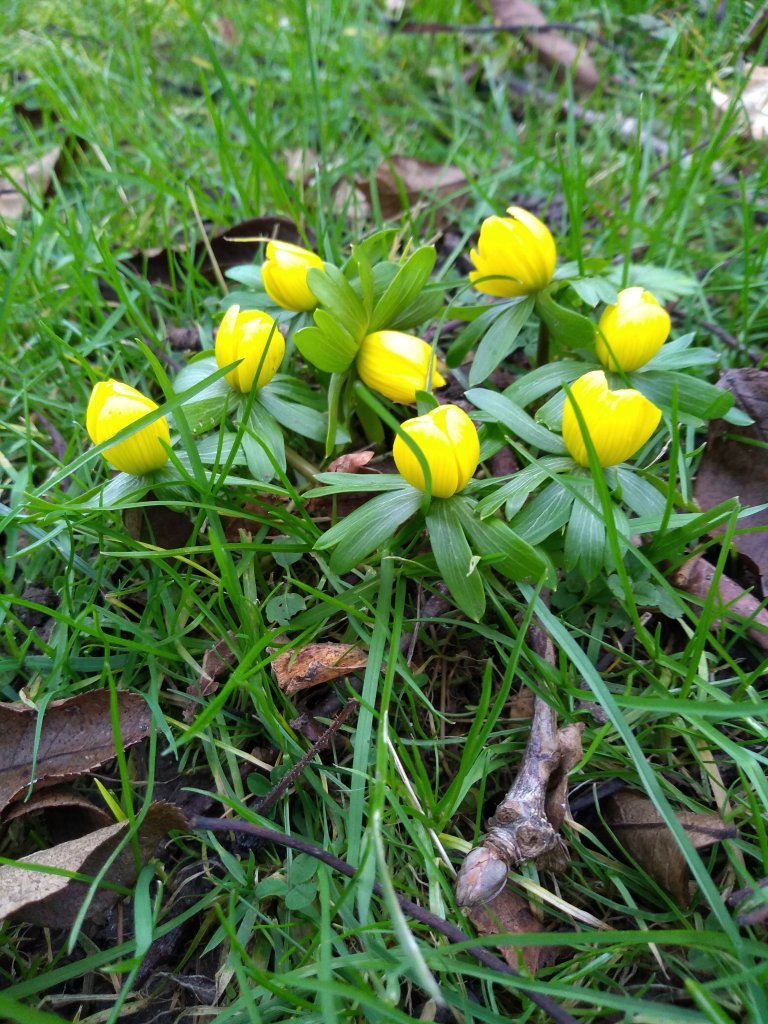
However, upon closer inspection small changes can be seen. The striking yellow of Winter aconites (Eranthis hyemalis) as well as delicate Early crocuses (Crocus tommasinianus) are beginning to bloom alongside the snowdrops (Galanthus).
The tiny red female flowers of Hazels (Corylus) have opened joining the male catkins. Plus, Blackthorn (Prunus spinosa) buds are ready to burst open (in fact on one walk, I saw a single flower already blooming).

I even witnessed a Red admiral (Vanessa atalanta) visit a flowering Mahonia on one sunny day; clearly making use of the milder weather before sheltering once again.

However the main focus of my attention, over the past few weeks, have been birds.

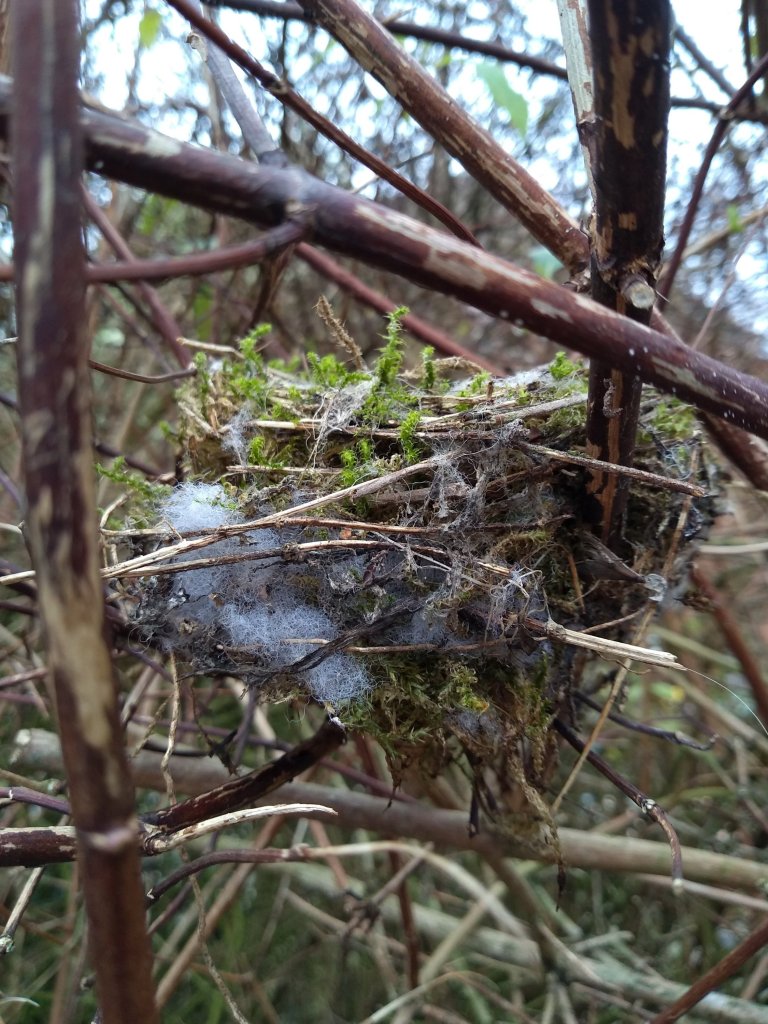
In one garden, I discovered a lovely little nest, from the previous year, in a shrub. Upon investigation I discovered it was either a Goldfinch (Carduelis carduelis) or Greenfinch (Chloris chloris) nest (most likely the former); it can be seen below.
I also saw a Lesser spotted woodpecker (Dendrocopos minor) perched on a tall tree in the distance. I was able to follow the sound of the drumming to watch it move around the trunk before flying off. Given the length of drumming and location of the red on it’s crown I was able to identify it as a male Lesser spotted woodpecker.

Then later in the week, while pruning roses, I watched a Wren (Troglodytes troglodytes) forage around the base of a hedge; I managed to film it briefly before it disappeared fully into the undergrowth.

I am currently reading ‘The Wren: A biography’ by Stephen Moss.

This charity shop find is a fascinating read. Chapters are set out month by month, each concentating on an aspect of a Wrens life. Included alongside facts about the Wren, are their involvement in human history, culture, literature, art and folklore together with beautiful illustrations. The chapter entitled February, for example, focuses on courtship and population. As with other books written by this author, such as ‘The Robin’, this book is definitely worth emmersing yourself in.

Lastly, once again I partook in the Big Garden Birdwatch. My results this year were-
7 Starlings (Sturnus vulgaris),
4 Magpies (Pica pica),
2 Bluetits (Cyanistes caeruleus),
2 Blackbirds (Turdus merula)- a male and female,
2 Wood pigeons (Columba palumbus),
1 Dunnock (Prunella modularis) as well as a Carrion crow (Corvus corone).

Although there weren’t any major surprises in what I saw, it was lovely that the Dunnock made an appearance (usually I only get to hear them). However the Red Kite (Milvus milvus), Ring-necked parakeets (Psittacula krameri), Great tit (Parus major) and Robin (Erithacus rubecula), that I regularly observe, all decided to have a lie in the previous weekend, most only making an appearance once my chosen hour had ended.

Posted in Bookworm review

Solace in Nature

During a particularly difficult week, once again, nature has given me solace. I went on local walks for exercise as well as watch birds from my sofa, while they visited the Rowan tree (Sorbus) next to my flat. Several bird species visited even though it’s mostly stripped of berries now. I noticed bud development on the branches already too.

I have recently spent time catching up on some reading.
The first book I read was ‘Witch’s Garden’ by Sandra Lawrence.

This book contains botanical illustrations along with other pictures, including those of specimens from KEW. Folklore as well as natural medicinal properties of fifty well known plants are explored.

One of the plants written about is the Rowan tree. In the past it has been associated with fairies, the Norse God Thor, Goddesses Hebe and Brid as well as St Brigid.

Also known as the Witches tree, traditionally Rowans were believed to offer protection against evil. Other common names for them are Lady of the Mountain, Quicken tree, Wildwood, Whispering tree and probably the most well known Mountain ash. The latter name is due to its ability to thrive in high regions and a similarly in the leaves, however it isn’t actually an Ash (Fraxinus). In fact Rowans are part of the Rosaceae family alongside Apple trees (Malus) Roses (Rosa) and Hawthorn (Crataegus). Just as the haws of the Hawthorn and Rose hips contain vitamin C, Rowan berries are high in this vitamin too. Although all require cooking before they can be eaten they were traditionally used to treat scurvy, sore throats and other ailments, especially during the World War Two. 

The second book I read was ‘Back to Nature’ by Chris Packham and Megan McCubbin.

Containing personal stories and factual explanations, this book looks at the importance of nature for humans along with what actions can be undertaken to protect it.

I grew up avidly watching the Really Wild Show and love Springwatch and Autumnwatch. Part of my enjoyment of this book was ‘hearing’ Chris’ voice as I read the parts he’d written. His descriptions contain both urgency and hopefulness. He speaks about various topics from the importance of nature as therapy to wildlife issues that exist at this time.

He also mentions how during lockdown verges sprung into life as wildflowers were allowed to bloom, something that was great for pollinators. Chris talks about the worrying loss by 97% of wildflower meadows since the 1930s, attributing to a decrease in insect numbers. Therefore reversing this by councils allowing verges to grow is great. Yet, having a small wildflower patch in gardens is another achievable action that we can all undertake that will have a big impact on helping wildlife thrive.

Both books are great reads, they are informative and enjoyable; I highly recommend them both.

Posted in Bookworm review, nature, Sundew Crochet

One Year On

Wow I can’t believe a year has passed since I started this blog. Occasionally the discipline of writing something each week has been difficult but I am glad I’ve stuck with it as I do enjoy it. 

I began this nature journal for many reasons; 

  1. To learn more about the natural world
  2. Record the natural world around me
  3. Develope my wildlife gardening knowledge
  4. Make use of the photographs I take
  5. Observe the small things in life
  6. Give me focus
  7. Improve my mental health.

I reviewed my first post, from the 26th February 2019, comparing it with this year. The first grass cut of 2020 was a week earlier but I haven’t noticed Brimstone (Gonepteryx rhamni) butterflies. We haven’t had record breaking February temperatures either. Instead we have had storms Ciara and Dennis on consecutive weekends and will end the month with Jorge (this weekend). This past week, the weather continued to be very wet with occasional sunshine and briefly hail and snow. Some areas of the UK are dealing with floods while others have snow.

Spring is still trying to break through. Clematis armandii is blooming while snow is falling.

Things that have remained the same however are the emergence of the spring bulbs, foraging bees and the Blackthorn (Prunus spinosa) flowering (traditionally this occurs in March and April).

Along with the observations I’ve occasionally shared my love of nature writing, in the Bookworm Reviews, which I have enjoyed. More recently I have begun to include my Sundew Crochet as my crochet is influenced by what I notice in nature.

I never imagined that people would read my blog, so thank you; I hope you continue to enjoy my future posts.

Posted in Bookworm review, nature

Bookworm Review- ‘Bird Therapy’ by Joe Harkness


I had downloaded this book ages ago and finally got round to reading it last month.

Part autobiographical and part informative this positive book is encouraging and so beautifully written that as the reader you are transported to his bird watching adventures.
Although Joe talks about his own experience with mental health, from his darkest days to eventually feeling better, it is never dwelt on. At the end of each chapter practical tips are given on how to engage in Bird therapy. He talks about different aspects of bird watching, anything from joining the serious world of twitchers through to taking part in the yearly RSPB Big Garden Birdwatch survey (describing his own explorations into each one as the book progresses).

Chapter eight ‘A sea-duck flotilla…’ particularly resonated with me. It describes birdwatching in winter. I also agree that watching birds is easier this time of year due to the bare trees and more birds taking advantage of bird feeders. Yet it is the time when I prefer to hibernate due to my Seasonal Affective Disorder. Having a bird feeder visible from my window helps encourage me to go out and face the world.

If you are dealing with mental health issues, know someone who is or feel a little bit low and stressed yourself then read this inspirational book. It proves how nature can help make you feel better and be part of the cure.

Posted in Bookworm review, nature

Bookworm Review- The Wild Remedy (How Nature Mends Us~ A Diary) by Emma Mitchell

I have wanted to read this book for a while. As somebody who seeks solace in nature, especially when my depression and anxiety worsen, I am always interested in reading about other peoples experiences.

A long time sufferer of depression Emma describes her ‘Grey Slug’ through the seasons and she uses nature to improve her mental well-being along with conventional help. She lives in the Cambridgeshire fens and sees a variety of wildlife from insects to mammals and wild flowers such as the Bee Orchid as she explores her local area.

Even during her darkest days, when she is unable to go out of the house to emerse herself in nature, she relies on watching birds in her garden.

This lovely book is soothing and inspirational. Her writing transports you to the world around her, while her beautiful illustrations and photographs are a joy to look at. This book is proof that nature can help mend us.

Posted in Bookworm review, nature

Library Bookworm Review- Extraordinary Insects

My latest literary listen is the audiobook ‘Extraordinary Insects’ by Anne Sverdrup-Thygeson (see Harper Collins)

I have found this book fascinating and I have learnt so much about this mostly unnoticed miniature world.

It answers the questions- What is an insect? What are the smallest and largest insects? How long have insects been around on earth? The answer to the last one is, before the dinosaurs.

Yet the author, an entomologist, also delves further and gives a wonderful insight into the varied insect lives. Her interest in and enthusiasm for insects is infectious. You will discover how insects inspire us, help with food production, clear the streets, solve crime, got Nobel prizes and more. We can even visualise a world without them.

After reading this book you will never view insects in the same way again.