
It was lovely to see some flowers beginning to show themselves last Tuesday.
Wildflowers I noticed as I walked were,


However I also saw flowers in gardens too. The cultivated plants that were also blooming were


It was lovely to see some flowers beginning to show themselves last Tuesday.
Wildflowers I noticed as I walked were,
However I also saw flowers in gardens too. The cultivated plants that were also blooming were
The walk on Sunday 10th January was an adventure, having wondered down a previouly unwalked route.
One thing I noticed on the roadside as I walked, was some Oakmoss (Evernia prunastri) which must have fallen from a nearby tree.
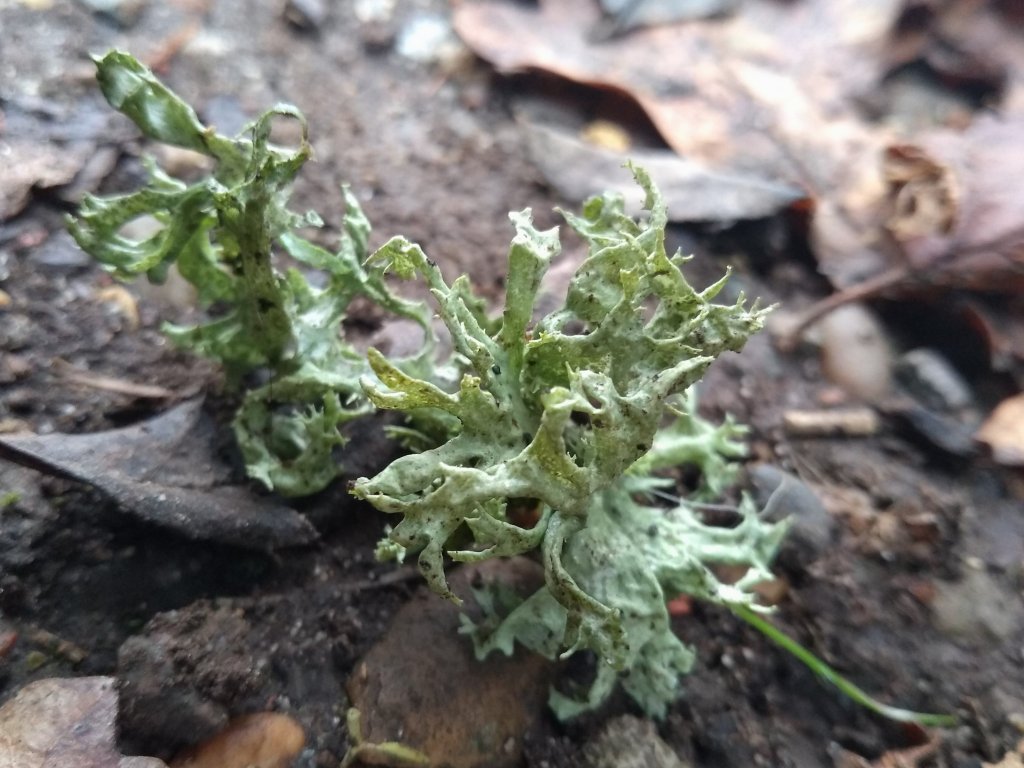
It’s also called Stag lichen, a slightly more appropriate name given that it’s a lichen and looks like a collection of antlers. It isn’t exclusively found on Oaks trees (Quercus) either. Oakmoss can grow on other broadleaf tree species along with conifers. In fact when it grows on conifers it takes on a turpentine aroma rather than a mossy earthy one.
Traditionally Oakmoss is used in the perfume industry, for its earthy scent and fixative properties, as well as in soaps, hair products and pot pourri. Thankfully it is grown commercially for this purpose. A couple of examples in which Oakmoss is used are the perfume Channel No. 19 and Ralph Lauren’s ‘Polo’ aftershave.
Since that Sunday I’ve also had new visitors to the Rowan tree (Sorbus). Most days afterwards I saw five goldfinch (Carduelis carduelis) eat the leftover dried out rowan berries. It was lovely to see the splash of colour these birds provide on gloomy days.


During a particularly difficult week, once again, nature has given me solace. I went on local walks for exercise as well as watch birds from my sofa, while they visited the Rowan tree (Sorbus) next to my flat. Several bird species visited even though it’s mostly stripped of berries now. I noticed bud development on the branches already too.
I have recently spent time catching up on some reading.
The first book I read was ‘Witch’s Garden’ by Sandra Lawrence.

This book contains botanical illustrations along with other pictures, including those of specimens from KEW. Folklore as well as natural medicinal properties of fifty well known plants are explored.
One of the plants written about is the Rowan tree. In the past it has been associated with fairies, the Norse God Thor, Goddesses Hebe and Brid as well as St Brigid.
Also known as the Witches tree, traditionally Rowans were believed to offer protection against evil. Other common names for them are Lady of the Mountain, Quicken tree, Wildwood, Whispering tree and probably the most well known Mountain ash. The latter name is due to its ability to thrive in high regions and a similarly in the leaves, however it isn’t actually an Ash (Fraxinus). In fact Rowans are part of the Rosaceae family alongside Apple trees (Malus) Roses (Rosa) and Hawthorn (Crataegus). Just as the haws of the Hawthorn and Rose hips contain vitamin C, Rowan berries are high in this vitamin too. Although all require cooking before they can be eaten they were traditionally used to treat scurvy, sore throats and other ailments, especially during the World War Two.
The second book I read was ‘Back to Nature’ by Chris Packham and Megan McCubbin.

Containing personal stories and factual explanations, this book looks at the importance of nature for humans along with what actions can be undertaken to protect it.
I grew up avidly watching the Really Wild Show and love Springwatch and Autumnwatch. Part of my enjoyment of this book was ‘hearing’ Chris’ voice as I read the parts he’d written. His descriptions contain both urgency and hopefulness. He speaks about various topics from the importance of nature as therapy to wildlife issues that exist at this time.
He also mentions how during lockdown verges sprung into life as wildflowers were allowed to bloom, something that was great for pollinators. Chris talks about the worrying loss by 97% of wildflower meadows since the 1930s, attributing to a decrease in insect numbers. Therefore reversing this by councils allowing verges to grow is great. Yet, having a small wildflower patch in gardens is another achievable action that we can all undertake that will have a big impact on helping wildlife thrive.
Both books are great reads, they are informative and enjoyable; I highly recommend them both.
 Bee in the Moment