
For several weeks I have heard lots of male Grasshoppers in the long grass next to my allotment plot. I have been hoping to see one so I can identify them. Finally last Saturday the opportunity arrived. Sitting on some carpet used as a weed suppressor, a Field Grasshopper (Chorthippus brunneus) was seen basking in the sun.

At last I knew which grasshoppers were repeating that soft short chirruping ‘song’. The sound made as the hind legs are rubbed against their wings attracts females. With successful mating approximately 15 eggs are laid and remain in the soil until next year. The nymphs hatch from March onwards and after shedding their skins three or four times become adults in the subsequent summer. This common UK grasshopper feeds on grasses so they won’t go hungry living amongst the overgrown plot.
The other amazing thing I saw last week was another bee with spectacular coloured pollen baskets. A Common carder bee (Bombus pascuorum) with orange pollen baskets was visiting a Salvia flower.
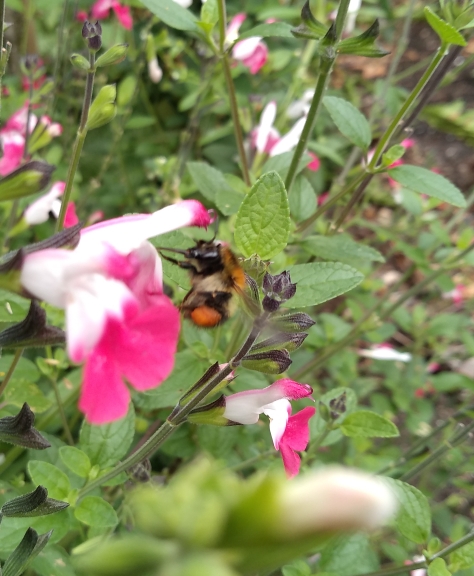
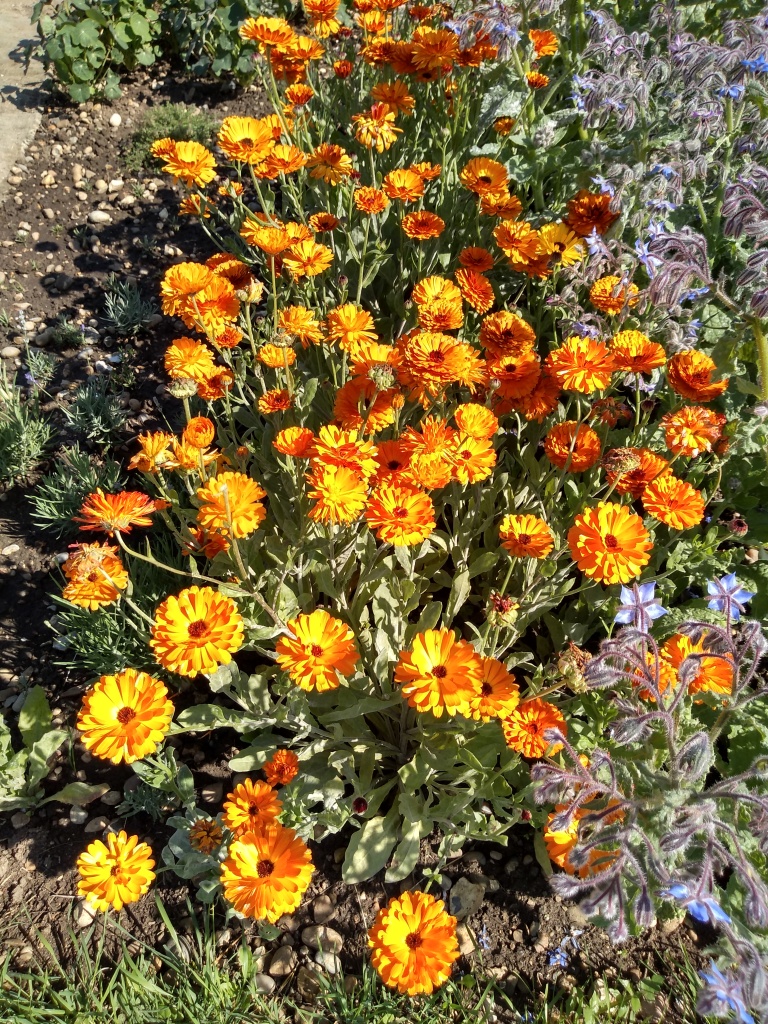
After checking a pollen colour chart, the source of the pollen it had collected was most likely from Calendula officinalis which are in full bloom at the moment (especially on my allotment).
 Bee in the Moment