
Last week saw Snowdrops (Galanthus) in full bloom
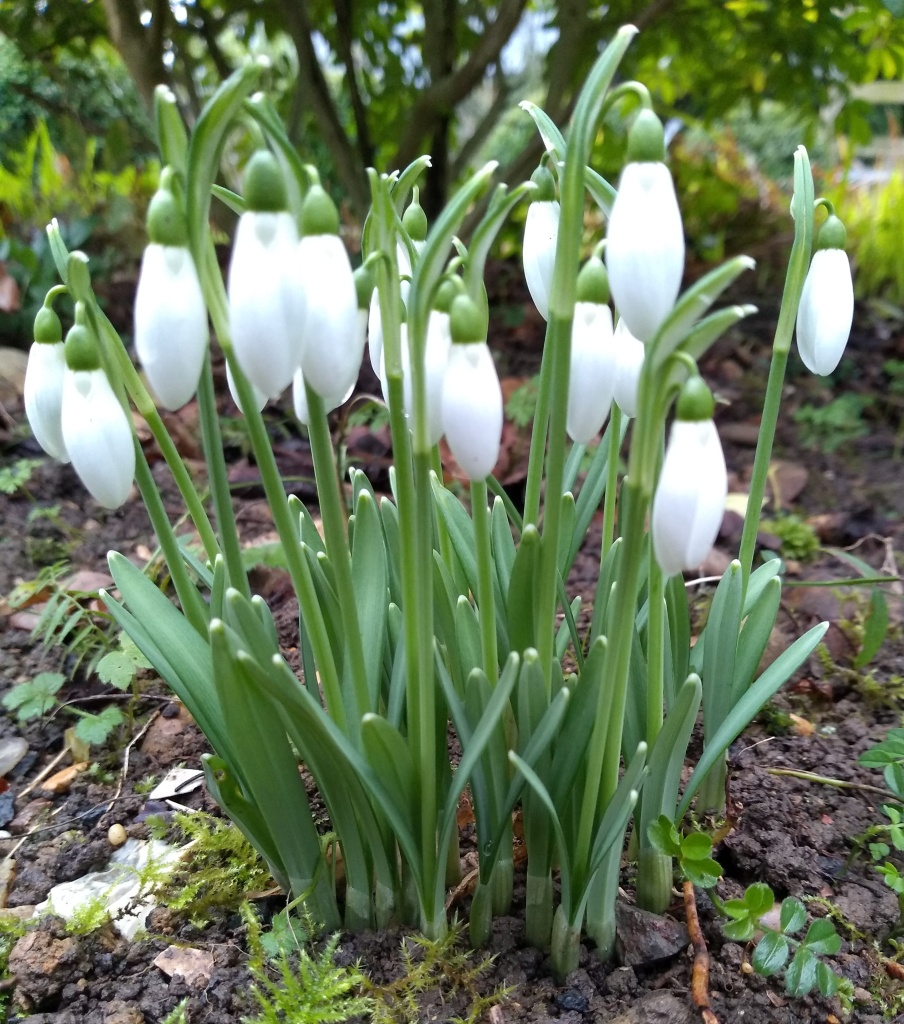
and Winter aconites (Eranthis hyemalis) starting to show themselves.
Robins (Erithacus rubecula) continued to follow me around, in the hope of a tasty meal, as I worked. Plus I noticed a Goldfinch (Carduelis cardueli) sing loudly on top of a fir tree, along with a Jay (Garrulus glandarius) retrieve buried acorns from a lawn.
However trees grabbed most of my attention last week. On Tuesday I noticed some lichen and moss on an old apple tree.

Saturday was a glorious day, wonderfully warm in the sunshine. I spent the day in London, enjoying a picnic besides the Thames in Island gardens, under a large London plane tree (Platanus × acerifolia)

These trees are a hybrid from the American sycamore (Platanus occidentalis) and Oriental Plane (Platanus orientalis). They were first discovered in the 17th century, although it is unlikely that trees from that century still exist. They are commonly found in cities, especially London, as this tree can tolerate pollution and compacted soil.
London planes have a beautiful silhouette. Their seed clusters (seen below) hang like balls, remain on branches until spring when they are released and become airborne.

Male flowers are yellow while the female ones, also on the same tree, are red.

This camouflage patterned trunk occurs as bark flakes, when the tree grows, revealing newer bark beneath; meaning that pollution captured within it is discarded regularly.
 Bee in the Moment